Will "Milkomeda" Happen? Scientists Reconsider The Galactic Collision Between The Milky Way And Andromeda Galaxies
A new study published questions whether we need to worry about our galaxy's potential demise.

Saturday, June 7, 2025

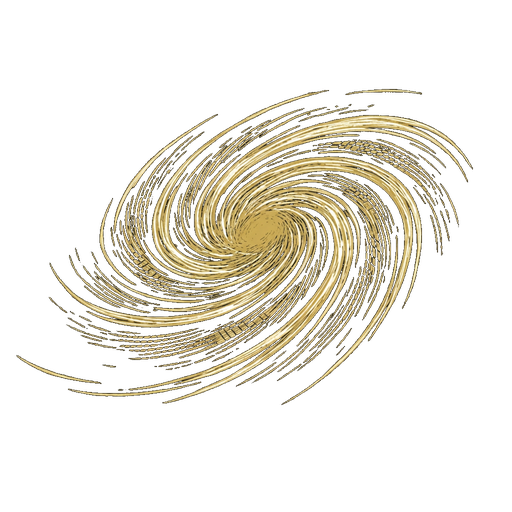
EARTH, Laniakea Supercluster—For decades, textbooks and planetariums depicted a cosmic showdown five billion years from now. The Milky Way would ram into its companion galaxy, Andromeda, merging into an enormous elliptical super‑galaxy popularly nicknamed “Milkomeda” or "Milkdromeda."
But in recent weeks, a flurry of new research has upended that certainty, suggesting the collision—once considered all but inevitable—may not happen at all. Or at least it may be delayed far beyond the anticipated window.
On June 2nd, Nature Astronomy published a groundbreaking study, aptly titled “No certainty of a Milky Way–Andromeda collision.” Dr. Till Sawala from the University of Helsinki and colleagues used data from NASA’s Hubble Space Telescope and the European Space Agency's Gaia mission to create detailed simulations.
The conclusion? A direct hit is no longer a sure thing. The probability of a merger within five billion years is now less than 2%. Even looking ten billion years into the future, the odds are only about that of a coin flip in cosmic terms.
“A head‑on collision is very unlikely, we found a less than 2% chance for that,” Dr. Sawala explained to Space.com. "But it's almost equally likely that (the Milky Way and Andromeda galaxies) stay well separated, in which case they won't merge, and also continue to evolve mostly in isolation.”
This is a big change. What was once seen as our galactic destiny might now be delayed – or avoided altogether. The simulations showed that if the two galaxies pass within about 500,000 light-years, friction will slow them down, leading to a merger. But if they miss by a wider margin, no merger happens.
A commentary in Nature Astronomy backs up this analysis, stressing the importance of including M33 and the LMC as gravitational troublemakers. Researchers at Durham University noted that these smaller galaxies "exert gravitational tugs," either pulling the galaxies closer or pushing them further apart, which significantly alters the likelihood of a collision.
A Century of Assumptions Turned Upside Down
The story of the Milky Way's future dates back to 1912, when astronomers first realized Andromeda was a separate galaxy heading our way. In 2012, Hubble Space Telescope observations measured Andromeda's sideways motion, finding it almost negligible; close enough to guarantee a collision in roughly 4 to 5 billion years.
However, the new study takes a different approach. Instead of focusing on the most likely scenarios, it accounts for the full range of observational uncertainties. By doing this, and by including the entire Local Group of galaxies, the researchers break free from the established narrative that has been building since 2012.
“It's somewhat ironic that, despite the addition of more precise Hubble data taken in recent years, we are now less certain about the outcome of a potential collision. That’s because of the more complex analysis and because we consider a more complete system. But the only way to get to a new prediction about the eventual fate of the Milky Way will be with even better data,” said Sawala, according to esahubble.org.
What Does This Mean for Earth – and for Space Exploration?
In practical terms, humans don't need to worry about an intergalactic crash anytime soon. Even if a merger does occur, our solar system—located far from the center of either galax—is likely to remain intact. Previous studies, which simulated the paths of supermassive black holes during mergers, suggest that star systems are often flung into new orbits or even ejected, but rarely destroyed.
Regardless, our sun's lifespan will end long before any galactic fireworks. As Dr. Sawala told the Associated Press, “The fate of our Milky Way galaxy may be moot for humanity. We likely won’t live to see the benefit.” The sun is expected to expand into a red giant in about five billion years: well before any potential collision.
Still, the broader scientific implications are significant. Galactic mergers have played a key role in how galaxies evolve. Stars, gas clouds, and dark matter fill galaxies, creating dynamics that shape their future appearance. In the early universe, such collisions were common. Even today, the Milky Way is absorbing smaller dwarf galaxies like Sagittarius.

About Milky Way News Editorial
The Milky Way News Editorial Team. Reporting from Earth, usually.
Read More

These Fungi Could Turn Martian Dust Into Farmland
Tech
How to Build a Universe in a Bottle
Humanity
Before There Were Planets, There Was Sugar: New Discovery Rewrites Life’s Origin Story
Universe
The Best Way to Find Aliens? Watch for the Ones Hoarding Their Own Sun
Universe
NASA’s New Dark Universe Telescope Sets Off to Map the Hidden Cosmos
Universe
Lunar Customs: Why Some Scientists Want a Port of Entry on the Moon
Earth
Astronomers detected a powerful cosmic 'UFO'. It’s not what you think
Universe
AI Just Found 118 Hidden Worlds in NASA’s Data
Tech
On a Planet With No Sunrises & No Sunsets, Scientists Hunt Life in the Twilight
Universe
Humanity Just Found the Milky Way’s Edge And Earth’s Closer Than We Thought
Universe
Do Aliens Think We’re Ghosting Them?
Universe
27 Tatooines: Astronomers Spot New Worlds With Double Suns in Our Own Galaxy
Universe
Lost in Space: Microgravity Makes Sperm Lose Their Sense of Direction
Universe
Alien Space Weather Stations Orbiting Distant Stars Could Tell Us Where Life Exists
Universe
‘Forbidden’ Black Holes: How the Biggest Stars Die Without a Trace
Universe
“Ancient Immigrant”: The Cosmic Time Capsule Drifting Through Our Galaxy
Universe
Mars Kept Its Water Hidden for Billions of Years. Humans May Have Discovered Its Hiding Spot.
Universe
A Massive Star Vanished Without a Trace. Astronomers Finally Know Why.
Universe
Betelgeuse Has a Lydia Too: Hubble Just Discovered the Red Supergiant's Secret Companion Star
Universe